

News/All pieces
by NK (comments: 0)
More moss for the GMC
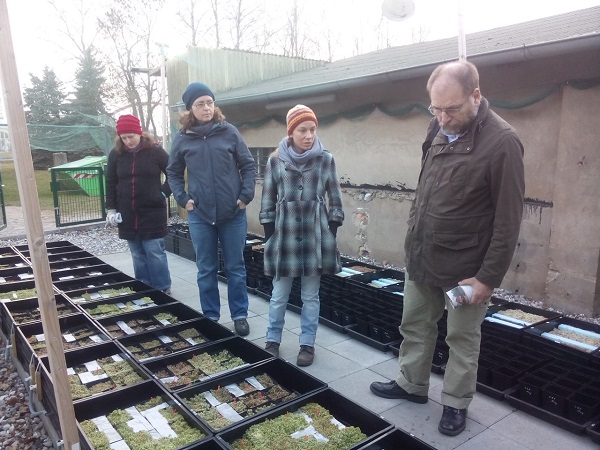
New peatmoss nursery established
17/12/18 Twelve peatmoss species are growing now in the new established nursery at the University of Greifswald. The project MOOSzucht intends to identify the species growing best under site conditions in (Northwest) Germany to reach high yields and produce large amounts of renewable biomass to substitute peat in horticulture. Nearly 500 samples of wild provenances across Europe – from Ireland to Estonia, from Sweden to Czech Republic and in Georgia – were collected within the MOOSzucht project as the base for research. Dr. Ulf Hauke from the German Federal Ministry for the Environment, Nature Conservation and Nuclear Safety, responsible for peatlands, visited the Greifswald Mire Centre on 17.12.18 including the new moss nursery.
by NK (comments: 0)
Finally: permanent professorship!
Greifswald peatland sciences enforced
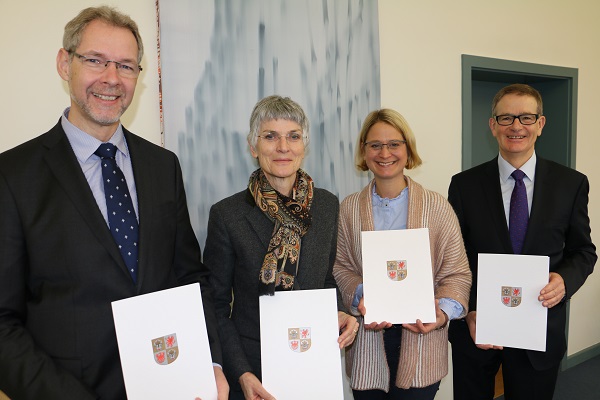
17/12/2018 A new professorship of peatland sciences was agreed upon by the government of Mecklenburg-Western Pomerania and the University of Greifswald at 17th December. This gives a promising and reliable basis for future peatland sciences at Greifswald University, where peatland research started some 200 years ago and the university acts as a partner in the Greifswald Mire Centre since 2015. “The Greifswald peatland scientists analyse, how people and agriculture may make use of peatlands without exploiting them. This is what we want to support with a new professorship” explains Birgit Hesse, Minister of Education and Science in Mecklenburg-Western Pomerania. This state is one of Germany’s peatland-rich states. State and university are financing the new W3 professorship jointly with the Stifterverband der deutschen Wissenschaft (tbc) and the Michael Succow Foundation. Further information (German only) is provided in the the state’s press release and at the university’s website.
In the picture from left to right: Thomas Krüger (Chairman of the parliamentary group of SPD MV)), Prof. Dr. Johanna Eleonore Weber (Rector of Greifswald University), Birgit Hesse (Minister of Education and Science MV) and Dr. Jürgen Buchwald (State Secretary of Agriculture and Environment MV) (Foto: H. Lipski)]
by NK (comments: 0)
Policy brief for COP24
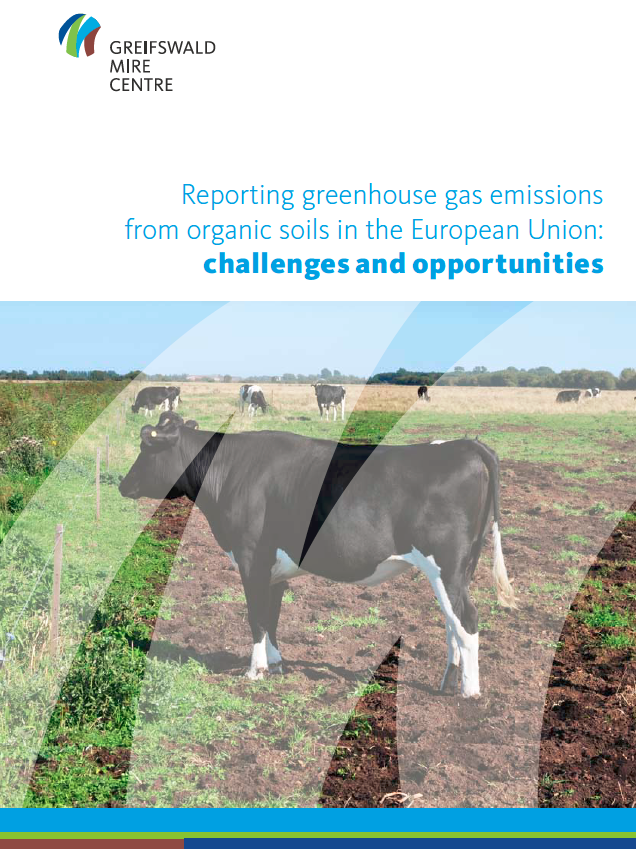
Reporting GHG emissions from organic soils in the EU
11/12/2018 Just in time for UNFCCC COP24 in Katowice, the Greifswald Mire Centre together with peatland scientists from 7 European institutions have produced a policy brief on reporting GHG emissions from organic soils in the EU. The brief covers the policy framework, weaknesses in reporting organic soils in National Inventory Submissions to UNFCCC, and recommendations for improvement. We have presented it at several events during UNFCCC COP24 in Katowice. The policy brief has been produced within the project INVESTIGATE funded under the European Climate Initiative (EUKI) of the German Federal Ministry for the Environment, Nature Conservation and Nuclear Safety (BMU). It has been co-ordinated by Alexandra Barthelmes (Greifswald Mire Centre).
by NK (comments: 0)
Peatlands at COP24
Against peat fires and for the climate
10/12/2018 The Greifswald Mire Centre, together with partners from the Global Peatlands Initiative, co-organises several peatland events at the 2018 UNFCCC conference in Katowice. The side event „The trace of haze: Peat fires as local and global challenges“ at 6th December was coordinated by UN Environment and Greifswald Mire Centre, and hosted by the German Government. The session presented global experience on peat fires and showcased coalitions for peatland restoration, e.g. the Restoring Peatlands in Russia Project, which was awarded the UNFCCC “Momentum for Change” award in 2017. A side event at 7th December brought together multilateral environmental conventions such as Ramsar Convention, CBD, UNCCD and UNFCCC, and future joint action on peatlands was agreed. At 11th December, the lunch session „Stop eating peat“ co-organised by CMok, Wetlands International and GMC will bring attention of the Climate Hub Katowice to peatlands. We will also contribute to a side event on peatlands and Nationally Determined Contributions (NDC‘s) 12th December. Follow @greifswaldmoor on twitter for details on COP24!
by NK (comments: 0)
Triple win for climate, people and the planet
Tropical peatlands in focus at Global Landscape Forum
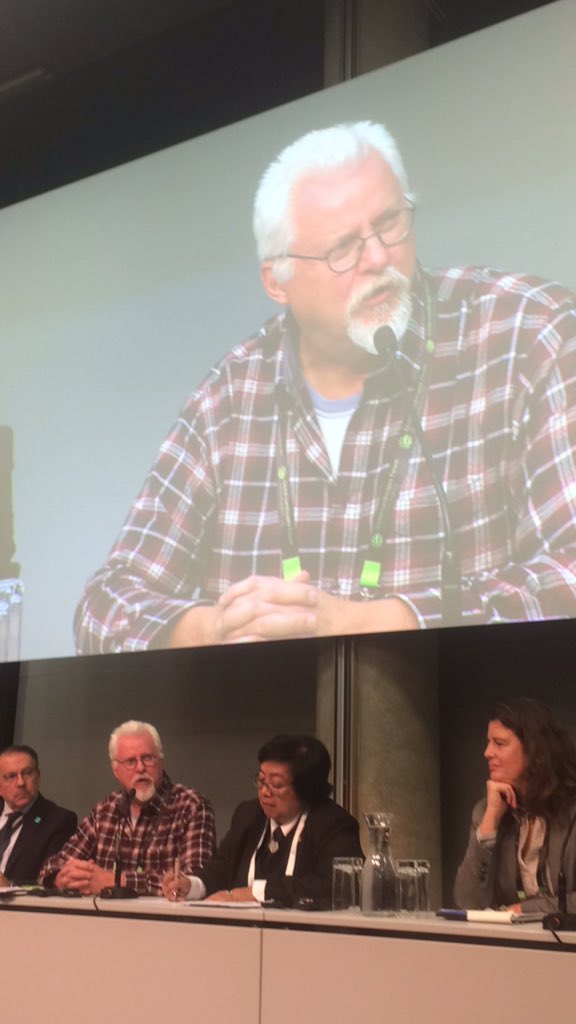
03/12/2018 Tropical peatlands are in focus of a high level event at the Global Landscapes Forum (GLF) 1st December 2018. With the Event Protecting Tropical Peatlands Together distinguished officials from the Republic of Congo, Indonesia, Germany and the Ramsar Convention joined forces for a better understanding of tropical peatlands and thus a better conservation and sustainable management. The session highlighted Indonesia and the Republic of Congo’s commitments to high level South South collaboration on management, restoration and protection of peatlands. Along with H.E. Siti Nurbaya, Minister of Environment and Forestry, Indonesia, and Arlette Soudan-Nonault, Minister of Environment and Tourism, Republic of Congo, also Hans Joosten (GMC) joined the session and shared his insights on priorities in peatland management. See the session here.
by NK (comments: 0)
Strong signal from Berlin
Conference ‚Peatlands must be wet! Climate protection by peatland conservation‘
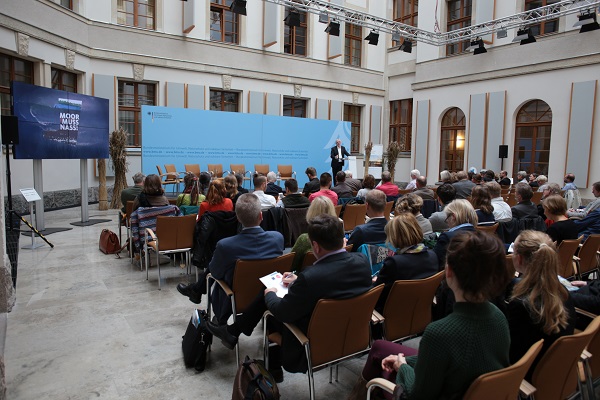
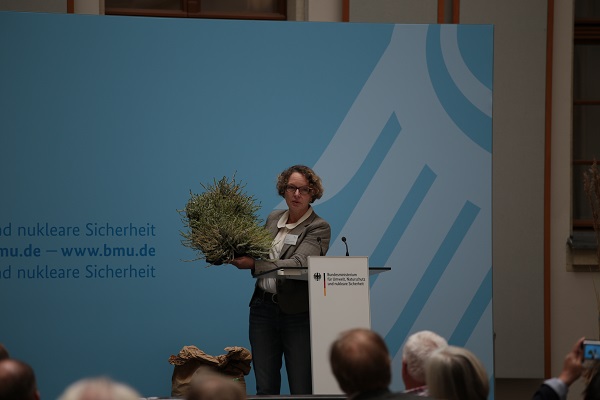
26/10/2018 ‚Peatlands must be wet!‘ was the key message of the conference on peatland and climate protection 26th October 2018 in the Ministry of Environment in Berlin. To comply with national and international obligations and minimise greenhouse gas emissions from peatlands by 2050, some 50,000 ha need to be rewetted annually. A large share could be transferred from ‚dry‘ agriculture and forestry to ‚wet‘ agriculture and forestry. The Project German Peatland Dialogue(National Climate Initiative) has facilitated exchange between farmers, water management authorities, nature conservation bodies, scientists and politicians, and stimulated progress in peatland management in the last three years. The final conference clearly showed what is needed: a clear political framework, financial incentives and compensation, brave entrepreneurs, and sound accompanying research. More information can be found in the press release on the Ministry of Environment.
by NK (comments: 0)
Sundew - sustainable in super size
Europe's largest cultivation area is being set up
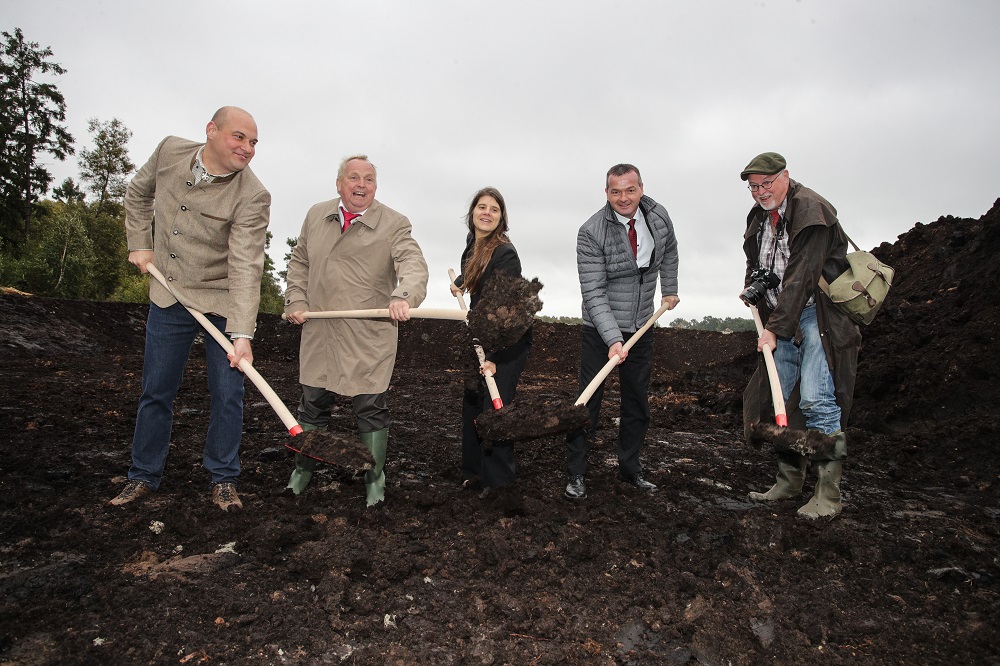
03/10/2018 Cultivating sundew for its medical purposes, is an endeavour Balazs Baranyai und Dr. Jenny Schulz have been pursuing for more than six years. Now, they are actually setting up the largest cultivation area for sundew in Europe - at Breesener Moor, a cut-over peatland within the biosphere reserve Schaalsee-Elbe (Mecklenburg-Western Pomerania). A water reservoir will be installed this autumn and a peat moss-sundew culture established in spring next year.
Six years ago both peatland scientists sowed first sundew seeds on a peat moss lawn, followed by numerous cultivations experiments. 2015 they succeeded in obtaining a sustainable sundew cultivation in combination with peat mosses and founded the PaludiMed GmbH – a first spin-off from the Greifswald Mire Centre. With the new cultivation area they bring pilot trials into large-scale production. Dr. Till Backhaus, Minister for Agriculture and Environment of Mecklenburg-Western Pomerania, opened the official ground-breaking ceremony in the Breesener Moor with numerous guests.
by NK (comments: 0)
Big book donation to PeNCIL

600 kg of peatland books arrived today
03/09/2018 After a long ride, Hans Joosten, John Couwenberg and Mira Kohl arrived today with a van full of books at the GMC. Professor R.S. (Dicky) Clymo (Queen Mary University of London, UK) has donated a large part of his personal library to our Peatland and Nature Conservation International Library (PeNCIL) . We feel deeply honoured and are very thankful. During the visit, Dicky Clymo received greetings and signatures of the General Assembly of the International Mire Conservation Group (IMCG) , which granted him Honorary Life Membership 31.08.2018 in Utrecht. Dicky Clymo is long-term IMCG supporter, editor of the journal Mires and Peat, and has influenced and stimulated generations of peatland scientists. In hope - studying peatlands for ever!
by NK (comments: 0)
Minister meets mire ambassadors
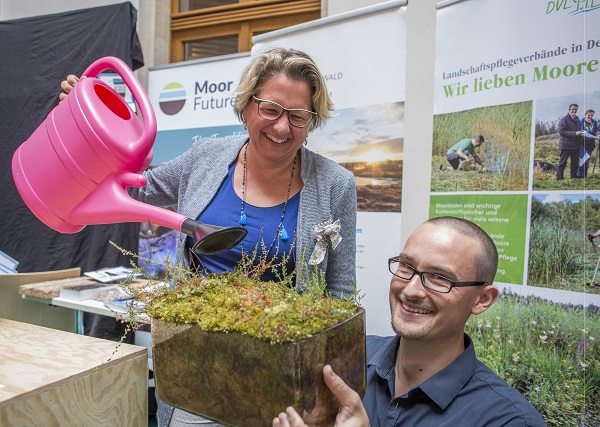
GMC, DVL and MoorFutures at the Open Day
25/08/2018 Federal Minister for Environment Svenja Schulze enjoyed rewetting a peatland at small scale. She is well informed about the importance of peatlands. At the Open Day 2018 in the Ministry of Environment, Tobias Dahms und Monika Hohlbein (both GMC) explained how peatlands and climate protection are connected in detail. The minister and her parliamentary secretary of state Rita Schwarzelühr-Sutter learnt about the Project MoorDialog and about the urgent need for action in the implementation of a climate-friendly, wet management of previously drained peatland sites. In particular, setting up demonstration facilities, their scientific monitoring, and removing constraining factors to wet(ter) peatland management were discussed. The GMC attracted many visitors with mires plants and products to its joint booth with the Deutsche Verband für Landschaftspflege (LPV).
by NK (comments: 0)
Peatland degradation globally documented
IPBES publishes extended report
21/08/2018 The Assessment Report on Biodiversity and Ecosystem Services for Europe and Central Asia (IPBES/6/INF/6/Rev.1 ) was recently published as extended report by the Intergovernmental Science-Policy Platform on Biodiversity and Ecosystem Services (IPBES). IPBES is an intergovernmental body that provides politics with scientific advice, comparable to the Intergovernmental Panel on Climate Change (IPCC). Contributing authors of chapter 3 (Status, trends and future dynamics of biodiversity and ecosystems underpinning nature’s contributions to people) are Hans Joosten and Franziska Tanneberger (both GMC). The report sheds light on peatland distribution and degradation using data of the GMC’s Global Peatland Database and links climate destruction due to peatland degradation and biodiversity loss.