

News
by Berit Krondorf (comments: 0)
Leidissoo mire in Estonia
Wet again!
18/02/2026 In December 2025, the final stages of the rewetting of drained parts of the Leidissoo mire complex in north-western Estonia were successfully completed. A film ( United for Peatland Protection: Restoration of Estonia’s Leidissoo Peatland) provides insights into the implementation of the project.
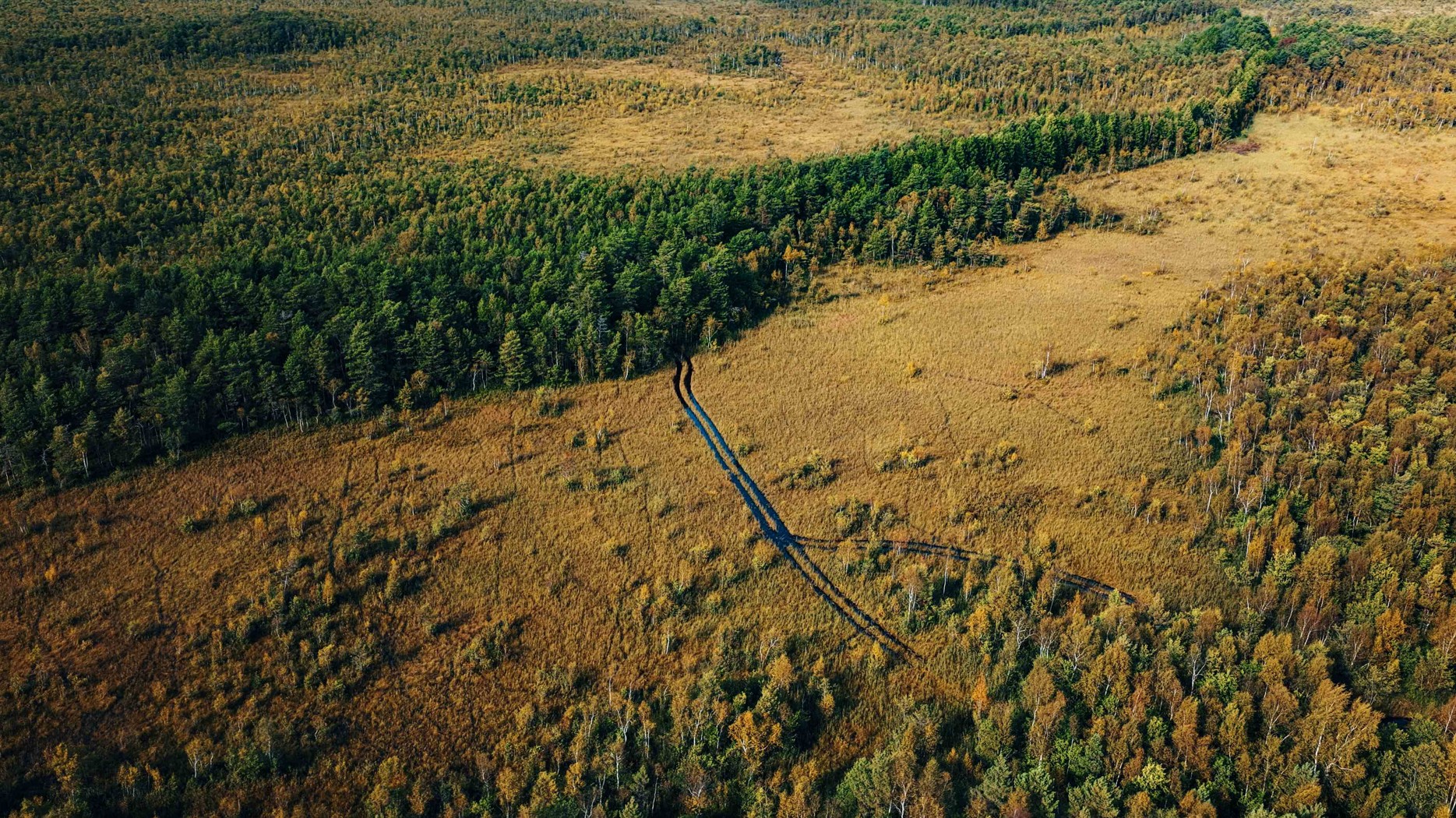
The project, which was launched in 2022, entered the implementation phase in spring 2025 after a comprehensive planning and approval. The restoration measures included closing around 100 kilometres of drainage ditches by constructing more than 500 dams. The aim of the measures is to restore the peatlands natural water balance and thus secure the ecological functions of the ecosystem in the long term, including the positive impact on global climate. Even during implementation on an area of over 800 hectares, initial successes were immediately visible, aided by an exceptionally wet summer.
What happens next?
In spring 2026, after the snow has melted and the spring floods have subsided, the Estonian Forest Management Centre (RMK) will make an initial assessment of the success of the rewetting. This will be followed by long-term monitoring to systematically record the hydrological and ecological development of the rewetted areas.
The Leidissoo mire is situated in a designated nature reserve and plays a central role in the conservation of near-natural mire ecosystems. The rewetting makes a significant contribution to climate change mitigation by reducing CO₂ emissions from drained peat soils.
The protected area comprises three mire complexes – Leidissoo, Sendrisoo and Musa – and combines all types of mires typical for western Estonia: fens, transition mires and raised bogs. It is rich in species and provides a habitat for rare bird and plant species such as golden eagles, white-tailed eagles, capercaillies, bog orchids, heath sedge, and brown beak sedge. Its special value lies in the size of the area and the richness of its bog and forest habitats.
This exemplary project shows that privately funded climate protection projects – such as this one by the Succow Foundation, partner in the Greifswald Mire Centre, PlanBe, HIT Environmental Foundation and RMK – can also make an important contribution to the restoration of ecosystems and achieving European climate protection goals.