

News/All pieces
by NK (comments: 0)
Peatland pavilion, peatland map, Michelle...
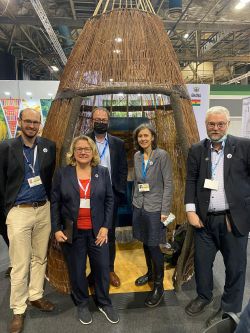
Without the protection and rewetting of peatlands, the global climate crisis cannot be countered. Peatland experts from Greifswald were able to make this clear to delegates, politicians, celebrities, practitioners and scientists from all over the world at the two-week World Climate Conference (UNFCCC COP26) from 31st October to 12th November in Glasgow. They are optimistic that the new knowledge about these climate protection potentials will now be incorporated into the policies and actions of many countries.
At the World Climate Conference in Glasgow, peatlands were presented for the first time in a separate pavilion organised by the Succow Foundation and the Greifswald Mire Centre together with the UN Environment Programme, IUCN UK Peatland Programme and other members of the Global Peatlands Initiative. The world peatland map developed at the Greifswald Mire Centre attracted visitors directly at the entrance. The twelve-day hybrid lecture programme offered a comprehensive overview of peatland science, protection and policy on all continents. Prominent visitors such as the former First Lady of the United States Michelle Obama, the Executive Director of the UN Environment Programme Inger Andersen, numerous ministers and other government representatives, as well as known environmental journalists such as Chris Packham of the BBC came by.
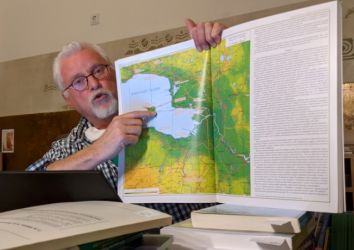
"Hundreds of delegates and observers to the Climate Change Convention looked at our huge peatland map. Many countries don't even know they have peatlands. Their representatives are taking away from Glasgow that peatlands are important for climate protection. Our presence here was as effective as peatlands are as carbon sinks." said Dr. Franziska Tanneberger, Director of the Greifswald Mire Centre. A special highlight was a water drop made of reeds and willow built by peatland experts from the University of East London, in which a sofa was placed - probably the most popular seat in the whole pavilion. This construction was an impressive eye-opener for many visitors as to what building materials from paludiculture can be used for.
The Succow Foundation and the Greifswald Mire Centre as a whole organised many events in the hybrid Peatland Pavilion e.g. "Organic Soils and Peatlands in the Baltic States: Greenhouse Gas Mitigation Measures and Paludiculture" on 8th November, "Peatland Protection in Germany" and "Peatlands in the Nile River Basin as a Nature-Based Solution" on 10th November, and the launch of a European Peatland Protection Initiative on 12th November. The Greifswald Mire Centre - with a large format printout on site and Dr. Alexandra Barthelmes as speaker in Greifswald - presented the world peatland map on 9th November.
The virtual Peatland Pavilion, which is in English, will continue to be available online to interested parties with multifaceted information on peatlands worldwide even after the World Climate Conference.
by NK (comments: 0)
Milestone for peatland climate protection in Germany
Funding decisions for BMU paludiculture pilot project in MV
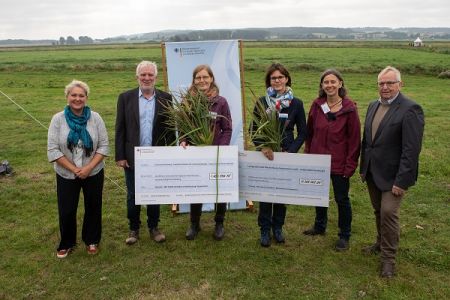
3/9/2021 Coinciding with the fieldday on paludiculture, Jochen Flasbarth, the State Secretary of the Federal Ministry for the Environment, Nature Conservation and Nuclear Safety (BMU), handed over funding decisions for the first of several new projects on paludiculture in Germany. The funding recipients are the University of Greifswald and the Landgesellschaft Mecklenburg-Vorpommern, which will receive the majority of the funding (12.6 million euros). As part of the pilot project, it is planned to raise the water level of two previously drained peatland areas in M-V and thus largely reduce greenhouse gas emissions from these areas. In the polders Bargischow Süd near Anklam and Sandhagen near Friedland, the cultivation of paludiculture will be tested and investigated on several hundred hectares. A milestone for peatland climate protection in Germany!
by NK (comments: 0)
How does it work with the cattail?
Field day on paludiculture
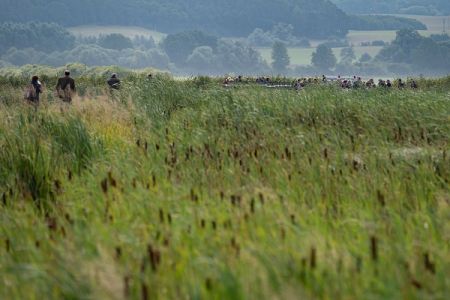
3/9/2021 At the public field day at the 10 ha trial area for cattail cultivation, about 160 local residents, farmers, scientists, politicians and representatives of the press visited us. On a tour with eight stations, we showed hands-on research and implementation: Experiences and studies on the establishment of the area, cultivation of cattail, water management, harvesting and utilisation of the biomass as well as on the importance of wet peatlands for the climate and biodiversity. In addition to Dr Till Backhaus, Minister of Agriculture and Environment M-V, and Dr Arif Havas Oegroseno, Ambassador of Indonesia to Germany, the State Secretary of the Federal Ministry for the Environment, Nature Conservation and Nuclear Safety (BMU), Jochen Flasbarth, also visited the field day.
by NK (comments: 0)
The German Environmental Award 2021...
goes to peatland scientist Hans Joosten!
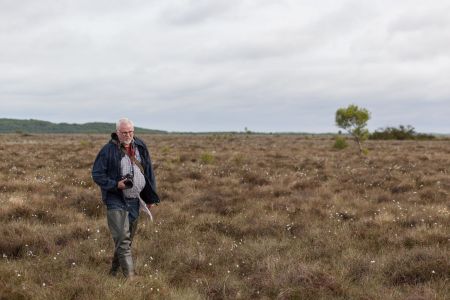
27/8/2021 This year, the German Federal Environmental Foundation for the Environment (DBU) is honouring peatland scientist Prof. Dr. Dr. h.c.. Hans Joosten with the German Environmental Award, one of the most highly endowed awards of its kind in Europe. Congratulations from the Greifswald Mire Centre!
Joosten himself likes to sum up his decades of research and commitment with #Moormussnass! With character, passion and the occasional morsel of peat, he has contributed to publicising the importance of wet peatlands for global climate protection. Joosten, who describes "everything related to peatlands" as his hobby, shares the prize endowed with 500,000 Euros with the internationally renowned scientist Prof. Dr. Katrin Böhning-Gaese. Both will be awarded the prize by Federal President Frank-Walter Steinmeier on 10th October in Darmstadt. Joosten intends to use the prize money to expand the peatland library PeNCIL - the world's largest peatland library with around 25,000 publications based at the Greifswald Mire Centre - into a global knowledge and cultural centre on peatlands.
by NK (comments: 0)
Removing barriers to peatland climate protection
New information paper on conversion to paludiculture
30/6/2021 Paludiculture with wetland species such as reeds, cattail and peat mosses is a good way to continue to use peatlands productively after water levels have been raised for peatland climate protection. In order to establish such permanent crops on previous grassland, the regulations on grassland conservation must be observed. Any conversion of permanent grassland into paludiculture must be approved. In addition, there is an obligation to establish new grassland (on arable land) as replacement. This obligation to quantative grassland maintenance is an obstacle to the implementation of paludiculture and should be reconsidered for peat soils.
In the MoKli project, there was an expert discussion with representatives of authorities of the federal states rich in peatlands. They discussed background to grassland protection, differences between mineral and peat soils, the application of existing exemption regulations and possible new special regulations to reduce the obstacle. The new information paper Guidelines for grassland conservation when converting to paludiculture (German only) summarises the legal framework and the main points of discussion.
A current opportunity to improve framework conditions for conversion of drainage-based peatland use to paludiculture is offered by the legal framework for the new funding period of the Common Agricultural Policy from 2023 onwards. While no special provision for paludiculture has been included in the Conditionalities Act in Germany, which regulates minimum standards such as permanent grassland maintenance, the more detailed legal regulation accompanying the Act could allow for the waiver of establishing replacement areas. A major obstacle to paludiculture and voluntary peatland climate protection would thus be removed.
by NK (comments: 0)
24h online Peat-Fest 2021
GMC’s contributions at 29th May
29/05/2021 At the 24h online Peat-Fest 2021 of the group RE-PEAT Hans Joosten is giving a 2h literary session on “Selma Ruoff: The mind of a scientist, the soul of a poet” at 21:30-23:30 CEST. Ruoff was an in-between between Russia and Germany, science and poetry, heaven and hell, gulag and freedom. Hear about the peatlands she studied, the people she met and the life she lived.
The session “Reimagening the #CAP” is offering future-minded perspectives and alternatives to current plans of agricultural policy within the EU. In the panel discussion at 14:15-15:15 CEST: Sophie Hirschelmann from Greifswald Mire Centre, Harriet Bradley from Birdlife, Silvia Contin from Good Energies Alliance and Sommer Ackerman from Withdraw the CAP. Tickets are free, but donations welcome when signing up for the event.
The Greifswald Mire Centre is pleased to contribute to the Peat-Fest again. First launched in 2020 it is the original and only 24 hour online festival completely dedicated to peatlands. The organiser RE-PEAT is a youth-led group using collaboration, education and a process of re-imagining to shift the peatland paradigm and push for peatland restoration and preservation.
by NK (comments: 0)
Lithuania: EU frontrunner in peatland recovery
16 million Euro reserved for restoring 8000 ha
20/05/2021 Amazing news from Lithuania: The investment for 16 mln. Euro has been earmarked in the Lithuanian EU Recovery and Resilience Facility plan for restoration of 8000 ha of currently drained agricultural peatlands. It was submitted to the European Commission on 17th May. The measure aims to reduce greenhouse gas emissions from agriculturally used peatlands by reversing negative impacts of drainage until 2026 and paving the road for further upscaling. So far, restoration projects were concentrating on rewetting protected raised bogs. Now, Lithuania is targeting agriculturally utilized fens which afford intensive cooperation of institutions, NGOs and land users but hold a huge potential as nature-based solution for climate action, especially in a peatland rich country like Lithuania. This is also an affirming result of the successful cooperation of the Lithuanian Foundation for Peatlands restoration and Conservation (FPRC) and the Succow Foundation, partner in the Greifswald Mire Centre. Around Baisogala, the organisations are rewetting agricultural land for carbon credits and could induce their experiences into the now accepted “New Generations’ Lithuania”-plan. For restoring peatlands in the Baltics, the Succow Foundation is also engaged in the EU-funded projects DESIRE and LifeOrgBalt.
The EU Recovery and Resilience Facility will make €672.5 billion in loans and grants available to support reforms and investments undertaken by Member States. The aim is to mitigate the economic and social impact of the Covid19 pandemic and make European economies and societies more sustainable, resilient and better prepared for the challenges and opportunities of the green and digital transitions.
by NK (comments: 0)
Peatlands in EU Biodiv Strategy
GMC position paper gives recommendations
28/04/2021 Healthy peatlands can contribute as nature-based solutions to the achievement of the European Green Deal and to the EU Biodiversity Strategy 2030. Hence, they need to be sufficiently protected and restored. How to do this is described in the GMC’s position paper Protecting and Restoring Peatlands – Targets and Recommendations for Peatlands in the EU Biodiversity Strategy. It lists the co-benefits of restoration, a qualitative as well as a quantative approach and principles to be included in the legislative proposal.
As claimed by the European Commission the biodiversity strategy will put Europe on the path to ecological recovery by 2030. The strategy, which is not a legislative proposal, has been adopted already by the European Council and still needs to be endorsed by the European Parliament. Votes are foreseen for May and June 2021.
by NK (comments: 0)
RRR2021 conference now documented
Key messages, presentations and virtual excursions online
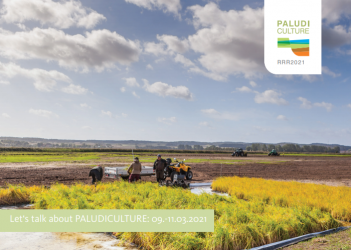
23/04/2021 From 9th-11th March 2021 the partners in the Greifswald Mire Centre organised the virtual 3rd conference on Renewable Resources from Wet and Rewetted Peatlands - RRR2021. More than 300 scientists and practitioners from 25 countries around the world shared their knowledge about paludiculture. Now, the key messages of the conference, the more than 100 presentations and posters are documented and available online.
You may find videos from two passionate keynotes and the special session on “Finance options for livelihoods from wet peatlands” co-organised with FAO, UNEP, IUCN and WWF on the YouTube channel of the Greifswald Mire Centre. Also some other highlights are to be revisited: The RRR2021 virtual excursions take you to bogs and fens, to rewetted peatlands, pilot sites for Sphagnum or Typha cultivation, a heating plant and a Paludiculture Tiny house. You also may enjoy some breathtaking peatland pictures presented by Tina Cliffey in her photography workshop. Concise information on the entire conference are given in the RRR2021 proceedings.
by NK (comments: 0)
Do you know Betje Polak?
Meet the queen of tropical peatlands at PeNCIL
04/02/2021 Peatland expert and bibliophile Prof. Hans Joosten regularly present stories and facts around peatlands at public literature evenings in the Greifswald Peatland and Nature Conservation International Library (PeNCIL). For the conference RRR2021 Renewable resources from wet and rewetted peatlands he opens the doors of the library to the participants and invite you to listen about a strong woman, who laid the foundations of peatland research in the tropics under the most difficult conditions: Betje Polak - Queen of tropic peatlands. Participation is free but registration is required per e-mail to bibliothek[at]greifswaldmoor.de. All persons registered will be sent a zoom-link to log in.