

News/All pieces
by Berit Krondorf (comments: 0)
World Wetland Day
A Year in Peatlands
2 February 2026 To mark International Wetlands Day on 2 February, the Greifswald Moor Centre is announcing a new series of events: ‘A Year in Peatlands’. Every month, an excursion will give interested parties the opportunity to explore the diverse peatland landscape in and around Greifswald and in Vorpommern.
In summer, participants can experience individual topics such as biodiversity, history of use and paludiculture in the field. In the winter months, participants can keep warm while working or sit in the cosy peatland library.
Here are the upcoming dates:
On 7 February, it's time to get stuck in at Mannhagen Moor. Together, we will clear young trees from the peatland to protect rare species. Hot soup will be provided during the lunch break.
On 16 March, the excursion will take us to the ‘treasure on the coast’, the Drammendorf polder on Rügen, with lots of information about renaturation and current research in this coastal peatland.
On 25 April, we will see whether peatland protection and use can be combined. The Bargischow Süd polder is being converted to wet cultivation (paludiculture).
On 9 May, we will experience the sound of a coastal flood peatland while observing breeding birds on the Karrendorfer Wiesen. In addition to fascinating bird calls, participants will learn all about the history of use and nature conservation measures in the area.
Whether natural, utilised, degraded or rewetted – the excursions take place in areas with very different conditions and functions. They are open to anyone interested, are free of charge, but require online registration.
All information here: A Year in Peatlands – Greifswald Moor Centre
Background: World Wetlands Day
Since 1997, World Wetlands Day (WWD) has been held annually on 2 February to raise awareness of the importance of wetlands, including peatlands. On 2 February 1971, the Ramsar Convention, the international agreement on the protection of wetlands, was adopted. Since 2021, it has been recognised as an international day by the United Nations. Pollution, drainage and agriculture, fires and overfishing have threatened or already destroyed wetlands, including peatlands, worldwide. Yet they are guarantors of biodiversity and climate protection. Among other things, they offer people protection against drought and flooding, purify water and regulate the microclimate. In Germany, 95% of the former peatlands have been drained and are no longer recognisable as such today.
by Berit Krondorf (comments: 0)
How does Typha germinate?
New brochure
27/01/2026 Andre Jansen set to find how Typa germinates and what it means for the future of paludiculture – a climate-smart way of farming on rewetted peatlands. Because wet agriculture can help to protect peatlands while still producing valuable biomass!
The result: the brochure "The germination of Typha species" now available online! Based on an extensive literature review, it translates ecological knowledge into practical insights for sustainable land use and restoration.
Five key takeaways:
1️⃣ Typha species produce enormous amounts of viable seeds, making sowing a promising and cost-effective alternative to planting.
2️⃣ Water regime is the key driver: fluctuating water levels strongly influence germination and seedling establishment.
3️⃣ Typha seeds germinate fast and reliably under the right conditions, especially with sufficient light and temperature.
4️⃣ The species’ ability to form persistent seed banks allows rapid colonisation after rewetting events.
5️⃣ Understanding germination ecology is essential for successful paludiculture and peatland conservation.
-> Discover more in the full brochure here
by Berit Krondorf (comments: 0)
Well peaty & spongy
Expert forum at the Future Forum on Rural Development at Green Week
19/01/2026 How can water be retained in the landscape? This is the topic of the expert forum on sponge landscapes and paludiculture on 21 January at Green Week. Water is key to making agricultural landscapes resilient to the effects of the climate crisis. The forum will provide best practice examples of how agriculture, nature conservation and local authorities can achieve this through water meadows, controllable drainage, agroforestry systems, humus formation or peatland rewetting and paludiculture. The speakers Corinna Friedrich and Thomas Köhler (DVL), Josef Sedlmeier (Regensburg Landscape Conservation Association) and Dr Franziska Tanneberger (co-director of the Greifswald Moor Centrum) will also discuss the framework conditions and transferability of practical experience to other regions.
The expert forum will take place from 2:30 to 4 p.m. in Room A6 in the City Cube and can also be followed via livestream. It is organised by the German Association for Landscape Conservation (DVL) in cooperation with the Greifswald Mire Centre.
by Berit Krondorf (comments: 0)
Paludi Summer School 2026
Only a few places left!
10/01/2026 Last chance: There are only a few places left for the nine-day Paludi Summer School in June 2026. Doctoral students and early-career scientists who are looking for expertise and want to network can still register until 31st January.
The Paludi Summer School will take place from 8 to 17 June 2026 at the Thünen Institute in Braunschweig and the Greifswald Moor Centrum.
The main goal is to strengthen interdisciplinary exchange and to connect participants with each other as well as with experts from research and practice. The focus is on jointly developing and deepening knowledge about paludiculture. The programme is supplemented by practical tasks, interactive workshops and excursions to project sites, rounded off by several leisure activities that provide opportunities for exchange and networking. Each participant is asked to give a presentation on their own research topic – an opportunity to share ideas, receive feedback and learn from each other.
Registrations are possible using this form. The Paludi Summer School is organised by the PaludiZentrale project.
by Berit Krondorf (comments: 0)
From Peatland to market
LCA for paludiculture – how does it work?
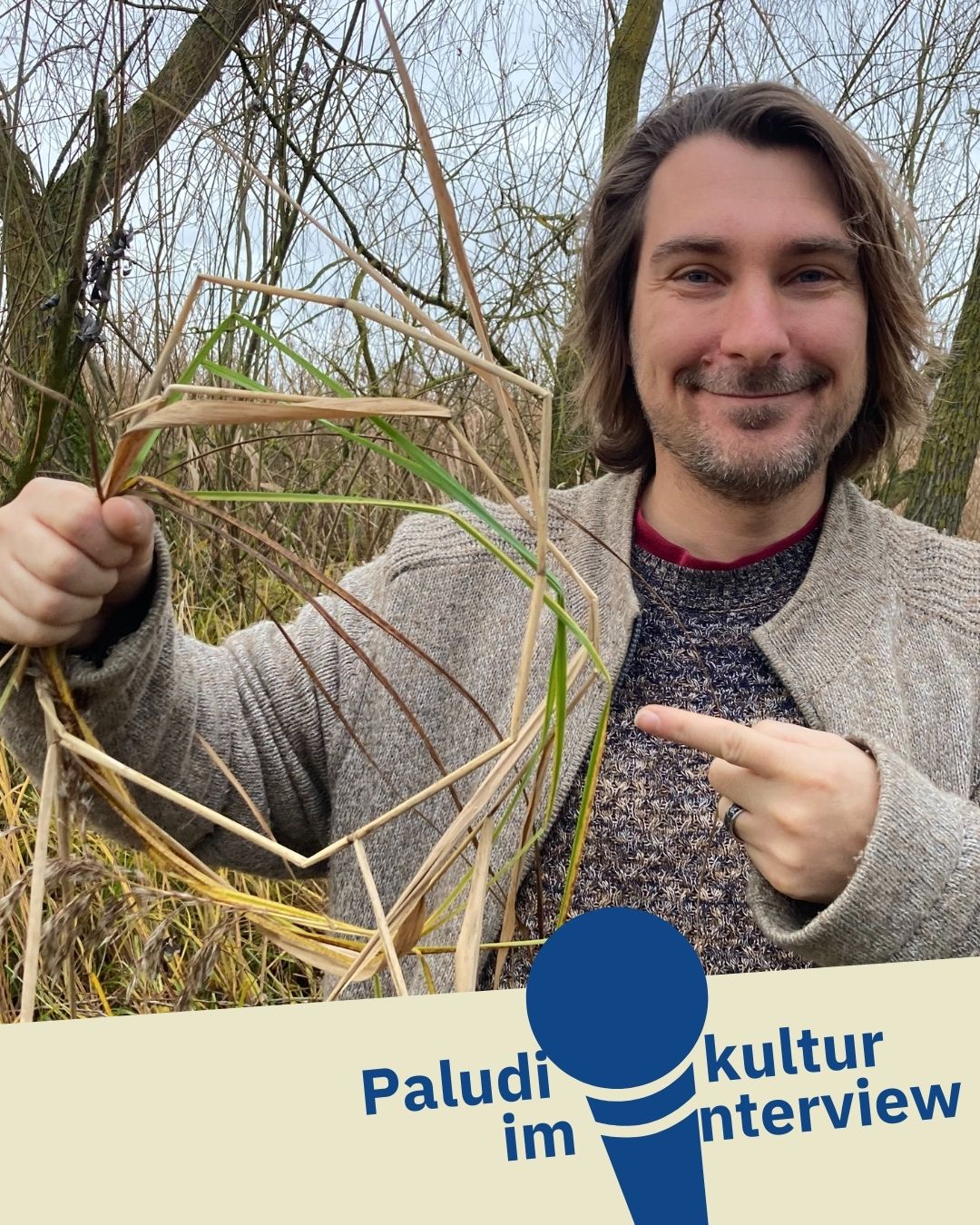
Greifswald, 7 January 2026 Clemens Kleinspehn is working at the University of Greifswald on the PaludiAllianz project to calculate the environmental impact over the entire life cycle – a so-called Life Cycle Analysis (LCA) – for a paludiculture product. His focus: the OTTO Group's shipping carton, which consists of 10% biomass from wet moors.
In the latest Paludiculture interview, he explains that this primarily provides the basis for the economic competitiveness of paludiculture products. The challenge here is that international life cycle assessment databases currently lack data on paludiculture products. Clemens Kleinspehn not only shows how the project closes these data gaps, but also which competing products may provide an orientation and which impact categories, such as water and energy consumption, biodiversity and greenhouse gas emissions, it focuses on. He also addresses the importance of LCA transparency, as there are no binding standards.
The LCA is not only intended to provide scientific findings, but mainly to offer companies and interested consumers a sound basis for decision-making. ‘Climate balances are an important purchasing criterion today,’ emphasises Kleinspehn. ‘Our results will be published so that producers and interested parties can better evaluate paludiculture products.’ The analysis is expected to be completed in six months.
by Berit Krondorf (comments: 0)
Peatland-PV could do much better
if it was wet
06/01/2026 Good measure, wrong spot: More GHG emitted than saved by sustainable energy – that’s how the greenhouse gas balance on solar power on drained peatlands in Germany looks like so far, this new study in Scientific Reports of @springernature shows:
https://www.nature.com/articles/s41598-025-27952-4
Instead, this could be far better, and solar-PV on peatlands even greener, if … they were wet! Rewetting stops CO2-emissions from drained peatlands nearly immediately and thus prevents harm from continued peat oxidation exceeding the benefit of a clean energy production.
“Newly wet peatlands with suitably designed solar parks could have a combined benefit and can unlock a powerful climate mitigation potential.” says co-author Carl Pump of the University of Greifswald. “But only with smart and careful planning - ideally in cooperation with all relevant stakeholders and authorities.”
165 solar parks have already been built on peatland until December 2023 with a total installed capacity of 643 MWp. In average they provide electricity for 200.000 households per year. Due to generally lower soils scores peatland areas might even have been favoured in the past. A substantial number of these plants receives feed-in tariff. Since 2023 it has been prohibited to receive feed-in tariff for new solar parks built on drained peatlands, making them largely unprofitable.
The study’s key messages:
- No new solar parks on drained peatlands!
- Peatland PV on rewetted soils can substantially contribute to energy transition!
- Through the additional rewetting of the peatland next to the PV, the emission values of a kWh can be even more positive.
-Rewetted peatland PV could also be part of landuse transition to rewet peatland
by Berit Krondorf (comments: 0)
We wish you rewetted peatlands...
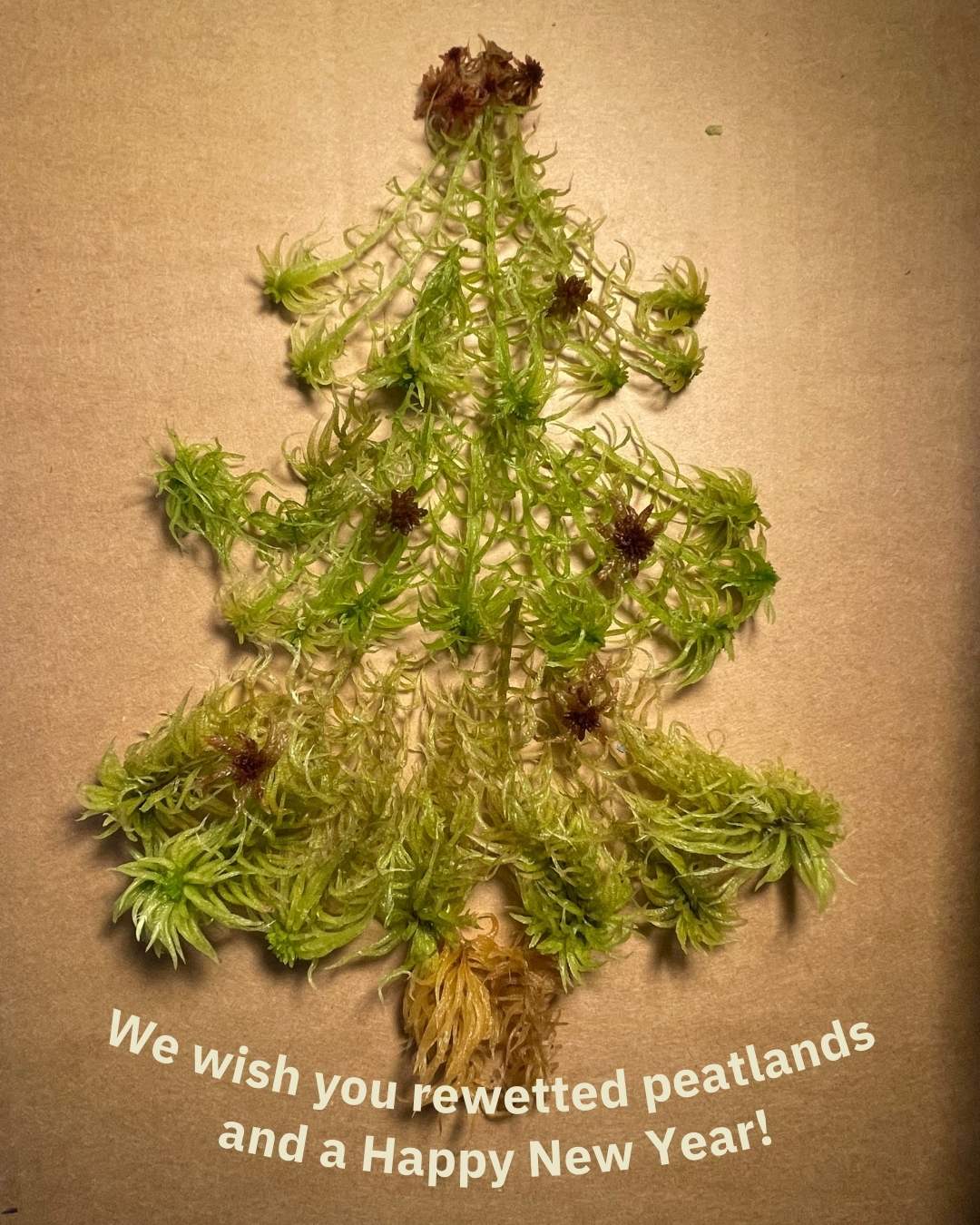
...and a Happy New Year!
22/12/2025 This is our peatland twist on the classic Christmas jingle. We send it to all peatland lovers and hope for it to become as true as possible in 2026.
As 2025 comes to a close, we want to thank all our friends, followers, and partners for your support of the Greifswald Mire Centre. Together, we’ve made strides in peatland protection, research, and advocacy. Here’s to even more impactful collaborations and dedicated peatland action in 2026! ✨
by Berit Krondorf (comments: 0)
Paludiculture Newsletter
New Issue
17/12/2025 The new Paludiculture Newsletter 4|2025 is here! These are our topics:
- Cuddling with peatland: Artist Daniel Hengst creates textile peatland plants that embody paludiculture
- Peatlands post-COP30: What was achieved for peatlands at the World Climate Conference in Belém and what are the prospects for upcoming COPs? Assessments by Franziska Tanneberger
- From peatland to market: Clemens Kleinspehn analyses the environmental impact of a paludiculture product over its entire life cycle. Why this is important? Read the interview!
- Anti-mud mats from peatlands – paludiculture biomass helps at the Wacken Festival
- Sneak peek at PaludiScout: The central platform for specialised technology for managing wet areas will launch soon.
- Opening: The Peatland Library in Greifswald now has a new home – find out more about this repository of knowledge and meeting place.
Plus: more topics and current dates in the event calendar!
We enjoy staying in touch with our readers. What topics would you like to see covered in the Paludiculture Newsletter, and what feedback do you have for us? Feel free to email us at communication@greifswaldmoor.de.
by Berit Krondorf (comments: 0)
New resilience check for Germany
with paludiculture and agrivoltaics/peatland PV
11/12/2025 In its latest resilience dossier, the Office of Technology Assessment at the German Bundestag (TAB) informs members of parliament about possible developments in ‘water management in agriculture’ in future scenarios up to 2050. It also covers the potential of new forms of use, such as agrivoltaics, peatland-photovoltaics and paludiculture on rewetted and previously drained agricultural land (link to the dossier in german).
The dossier considers agrivoltaics and peatland PV to be particularly promising. It states that partial shading by PV modules could reduce evaporation and thus conserve water resources. Furthermore: ‘For peatland-photovoltaics (peatland PV) ... an estimated technical potential of 440 to 880 GWp is assumed in Germany. This corresponds to approximately four to eight times the photovoltaic capacity currently installed in Germany and illustrates the enormous energy potential of this use.’ However, our knowledge of the effects of peatland PV is still limited, and further research is needed before large-scale implementation can be recommended. Projects such as MoorPV and MoorPower are currently conducting research about it.
The dossier assesses paludiculture as follows: ‘Agriculture on rewetted peatland areas with peat conservation, known as paludiculture, therefore still occupies a niche position ... However, this could change by 2050 due to the great potential for climate protection.’ Prof. Dr. Gerald Jurasinski, Carl Pump and Dr. Wendelin Wichtmann contributed their expertise to the dossier.
About the resilience dossiers:
The resilience check and the resulting dossier are a consulting service for the German Bundestag and serve as background information for specialist committees, as well as for social actors and the public. It analyses the potential of scientific and technological developments and discusses their possible impact on society. It discusses on an infrastructure-related topic each year. The 2026 edition of the Resilience Check will concentrate on ‘Cybersecurity in Research’.
by Berit Krondorf (comments: 0)
The big spread
300 m³ of peat moss on 6 hectares
05/12/2025 A total of 300 m³ of peat moss was spread over 6 hectares in MOOSland. The project aims to help a small plant make it big – peat moss.
As a renewable raw material, it can replace peat in horticulture, e.g. in vegetable production. It can be cultivated in a climate-friendly manner on rewetted degraded raised bogs
and, with a total of only 10 t CO₂ eq/ha/year (including harvesting, cf. Daun et al. 2023), it performs three times better than raised bog grassland (32 tonnes) in terms of GHG emissions.
Research projects over the past 20 years have shown that sphagnum moss cultivation works. The cultivation method is now being optimised on the MOOSland trial areas in Hankhauser Moor and Barver Moor.
The land was prepared with particular care: only a minimal amount of topsoil was removed, access roads serve merely as boundaries, and the irrigation system has been minimised. Sowing was carried out using a caterpillar track to protect the sensitive peatland soil.
Scientists are now investigating how peat mosses grow in this new production system compared to the old one and what effects this has on greenhouse gas balance, biodiversity, hydrology, nutrients, economics, etc. The two sites differ in terms of climatic and hydrological conditions. The aim is to use this information to develop a handbook of measures for the successful implementation of peat moss paludiculture and its limitations. Both demonstration areas also serve as visual aids for numerous interested groups and, in particular, for the parallel stakeholder process in the two districts.
-> More about the MOOSland model and demonstration project at moosland.net.